
 Samuel Adams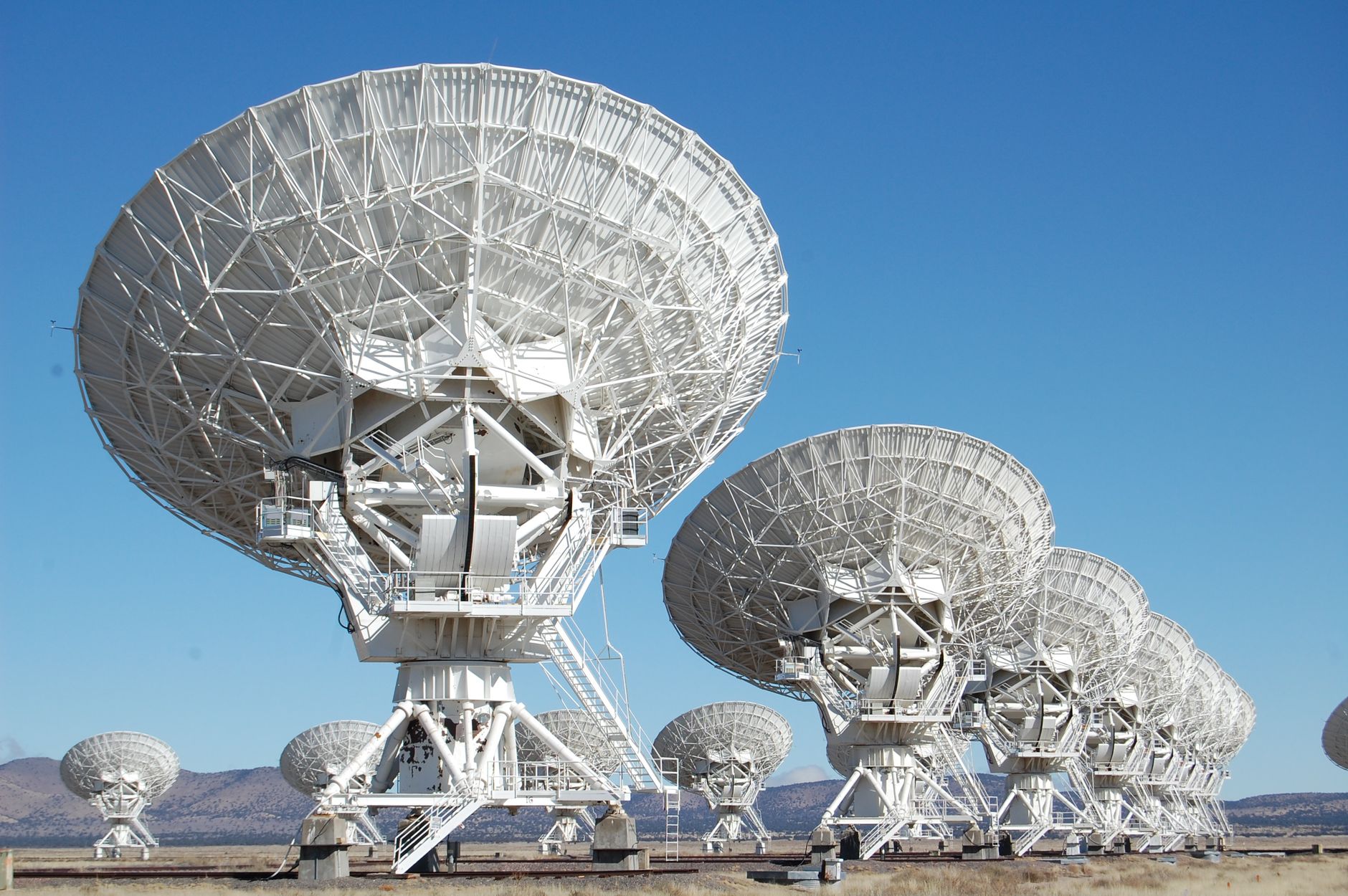
China’s FAST telescope has identified a pulsar as part of an evolving primordial triple star system, marking a remarkable achievement in astronomical research.
Overview of the FAST telescope
The FAST telescope, officially known as the Five-hundred-meter Aperture Spherical Telescope, is the world’s largest single-dish radio telescope located in Guizhou province, China. Completed in 2016, this monumental structure has significantly advanced the field of radio astronomy. Its primary purpose is to explore deep space phenomena, including pulsars, which are highly magnetized, rotating neutron stars that emit beams of electromagnetic radiation.
As part of its ongoing research, the FAST telescope has made headlines by discovering a pulsar system that is believed to be part of an evolving primordial triple star system. This discovery highlights the telescope’s capability to detect and analyze celestial objects with unprecedented precision.
The technology behind the FAST telescope includes a unique design that utilizes a large, spherical dish to collect radio waves from space. This allows scientists to study cosmic events that were previously difficult to observe. The telescope’s sensitivity and range make it an essential tool for astrophysical research, enabling astronomers to gain insights into the formation and evolution of stars and galaxies.
In addition to pulsars, the FAST telescope is expected to contribute to various fields of research, including dark matter and gravitational waves. As it continues to operate, the FAST telescope will undoubtedly play a crucial role in expanding our understanding of the universe.
Significance of the pulsar discovery
The discovery of a new pulsar system by China’s FAST telescope marks a significant advancement in our understanding of the cosmos. This pulsar, part of an evolving primordial triple star system, opens up new avenues for research in astrophysics.
One of the most crucial aspects of this discovery is the potential for studying gravitational waves. Pulsars, particularly in binary or triple systems, can produce ripples in spacetime that may be detected by future experiments. This aligns with ongoing efforts to better understand the universe’s structure and the fundamental forces at play.
Moreover, the identification of this pulsar system provides insights into stellar evolution. Understanding how these stars interact with one another can reveal the life cycles of stars in various environments. Researchers are eager to analyze the pulsar’s characteristics, which may offer clues about the conditions under which it formed.
Additionally, the FAST telescope’s ability to detect such phenomena highlights its advanced capabilities. As one of the world’s largest and most sensitive radio telescopes, FAST is paving the way for groundbreaking discoveries. The data gathered from this pulsar system will undoubtedly contribute to a deeper understanding of the universe and the nature of celestial bodies.
In summary, the pulsar discovery is not just a scientific achievement; it is a step toward unraveling the complexities of cosmic evolution, reinforcing the importance of China’s FAST telescope in contemporary astronomy.
Details of the primordial triple star system
China’s FAST telescope has made significant strides in identifying a primordial triple star system, showcasing its advanced capabilities in astronomical research. The discovery centers around a pulsar, an incredibly dense and rapidly rotating neutron star that emits beams of electromagnetic radiation. This pulsar is part of a complex gravitational dance involving two other stars, illustrating the dynamic interactions that can occur in such systems.
The identified pulsar, designated PSR J0045-7319, orbits its companions with remarkable precision. Scientists believe that the interactions between the three stars can provide insights into the formation and evolution of stellar systems. As the pulsar spins, it emits regular pulses of radiation, which can be detected by the FAST telescope, offering valuable data about its characteristics and the gravitational influences exerted by the other stars.
Understanding this primordial triple star system is crucial for astronomers as it may help answer fundamental questions about the life cycles of stars and the conditions that lead to the formation of such complex systems. The discovery reinforces the importance of the FAST telescope in expanding our knowledge of the universe and highlights its ability to detect and analyze celestial phenomena with unprecedented detail.
Overall, the findings from the FAST telescope not only enhance our understanding of pulsars but also contribute to the broader field of astrophysics, paving the way for future discoveries.
How the discovery was made
The discovery of the pulsar system was made possible through the advanced capabilities of China’s FAST telescope, which stands for Five-hundred-meter Aperture Spherical Telescope. Researchers utilized the telescope’s exceptional sensitivity to detect faint radio waves emitted by pulsars, which are rapidly rotating neutron stars that emit beams of radiation.
To identify the pulsar, astronomers conducted a meticulous survey of the surrounding sky, monitoring the radio signals over an extended period. The unique properties of the pulsar, such as its rotation rate and the regularity of its emissions, allowed scientists to categorize it within the context of a primordial triple star system.
Key steps in the discovery process included:
- Data Collection: The team collected vast amounts of observational data using the FAST telescope, focusing on specific regions known for pulsar activity.
- Signal Analysis: Advanced algorithms were employed to sift through the data, filtering out noise to isolate potential pulsar signals.
- Verification: Once a potential pulsar was detected, follow-up observations were conducted to confirm its existence and characteristics.
This combination of cutting-edge technology and detailed analysis not only led to the identification of the pulsar but also underscored the capability of China’s FAST telescope in contributing to our understanding of the universe.
Implications for future research
The discovery of a pulsar system by China’s FAST telescope opens up new avenues for future research in astrophysics and stellar evolution. This remarkable finding not only enhances our understanding of pulsars but also provides insights into the complexities of star formation and interaction within primordial systems.
Researchers anticipate that further studies will delve into the following areas:
- Stellar Evolution: The pulsar’s role within the triple star system could unveil the processes that govern stellar life cycles, particularly in environments with multiple gravitational influences.
- Gravitational Waves: The interactions among the stars may lead to the generation of gravitational waves, allowing scientists to explore new methods of detection and study the universe’s fundamental forces.
- Exoplanetary Systems: Understanding pulsars in this context may provide clues about the formation of planets around stars, especially in systems where multiple stars are present.
- Galactic Dynamics: The findings could contribute to a broader understanding of galactic structure and behavior, especially in regions densely populated with stars.
As the FAST telescope continues to operate, the potential for significant discoveries remains high. The implications of the pulsar system discovery extend far beyond immediate findings, promising to reshape our comprehension of astrophysical phenomena.
Expert opinions on the findings
Experts in the field of astrophysics have expressed enthusiasm regarding the findings from China’s FAST telescope, highlighting the significance of the newly identified pulsar system. Dr. Lin Zhang, a leading researcher at the National Astronomical Observatories of China, stated, “The discovery not only showcases the advanced capabilities of FAST but also opens new avenues for understanding the evolution of pulsar systems.”
Furthermore, Dr. Emily Carson, an astrophysicist based in the United States, emphasized the broader implications of this study. “This pulsar system, as identified by China’s FAST telescope, offers invaluable insights into the interactions within a primordial triple star system,” she noted. “Such discoveries allow us to refine our models of stellar evolution.”
Another notable opinion came from Professor Samuel Lee, who pointed out that “the precision of FAST’s measurements could redefine our understanding of gravitational waves and their origins.” He added, “The implications for future research are immense, particularly in the context of multi-messenger astronomy.”
Overall, the consensus among experts is that the findings from the FAST telescope are not merely an achievement for China, but a significant step forward for the global scientific community, fostering collaboration and innovation in the study of the universe.
China’s FAST telescope has opened new avenues for astrophysical research, allowing scientists to explore the mysteries of pulsar systems in unprecedented detail. The recent discovery highlights the capabilities of China’s FAST telescope in contributing to our understanding of the universe.
Photo by braincontour on Pexels
Where this came from
Related stories
Delhi clampdown debate: The Right Way to Discuss Issues · Wall Street climbs: The Proven Impact on Your Investments · October Prime Day deals: What are the best last-chance savings?